We’re putting the finishing touches on something special — ordering opens soon. Stay tuned.
← Back to Catalog

Epithalon

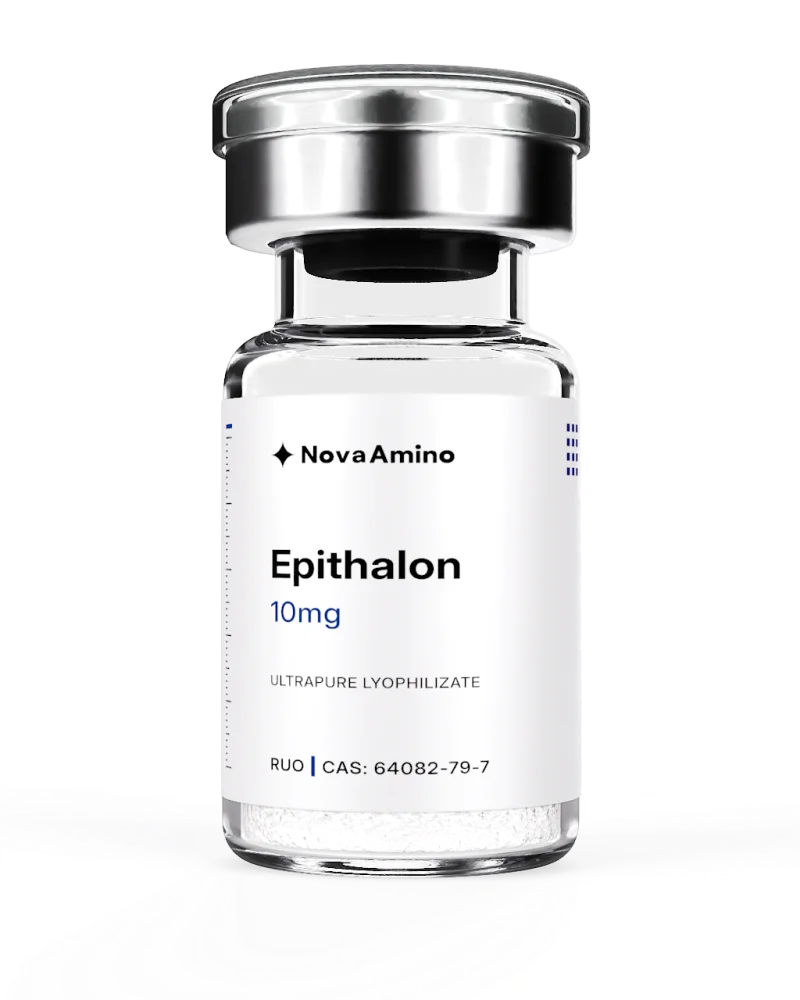
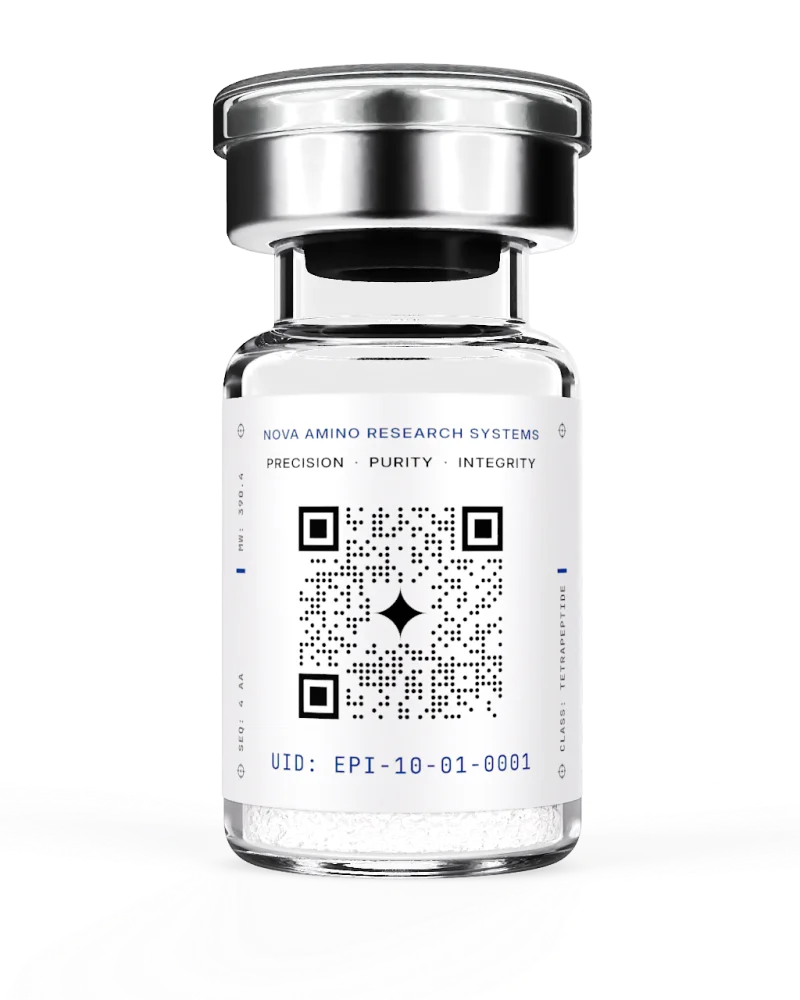
Epithalon vial frontEpithalon vial back
Loading...

Summary

Epitalon, Epithalone, AEDG

Epithalon is a short peptide originally extracted from the pineal gland that has been studied for its effects on cellular aging processes. Research has examined how it influences telomerase activity and telomere length in cell culture experiments. Studies have also investigated its effects on the endocrine system and aging markers in animal models.

Current Research
  • Telomere biology and cellular aging
  • Epigenetic regulation of the aging process
  • Pineal function and circadian rhythm

Identification
CAS
64082-79-7
Formula
C14H25N4O9
M.W.
390.4 g/mol

Key Research Statistics

Telomerase & Longevity

33.3%Telomere GrowthAverage increase in human lymphocytes in vitro
10–30%Lifespan ExtensionConsistent across multiple animal models — decades of data
5Aging Hallmarks TargetedTelomeres, epigenetics, oxidative stress, immunity, circadian
Evidence Confidence by Level
Tiered evidence strength
Cellular/Mechanism5/5
Animal (Multiple Species)5/5
Human (Preliminary)3/5
Khavinson research group
Hayflick Limit Override
Cell division passages before senescence
Epithalon-Treated44
Untreated Control34
Khavinson et al.
Need-to-Know

  • Room Temperature (Lyophilized): Up to 3 weeks
  • Refrigerated (Reconstituted): Up to 42 days
  • Frozen (Lyophilized): 24-36 months
  • Reconstitution Solution: Bacteriostatic water, Sterile water
  • Appearance: White powder

Regulatory Status

Not FDA-approvedInvestigationalPreclinical

Used in Russian geriatric medicine. Related compound approved in Russia.

Sources: FDA.gov, Russian literature

History

1970s
Russian research began on peptides for anti-aging in 1973.
1980s
Discovered in late 1980s by Professor Vladimir Khavinson at St. Petersburg Institute of Bioregulation and Gerontology from animal pineal glands; designed to slow aging.
1990s
Created synthetic version; early studies on cell aging.
2000s
Studies showed it may lengthen telomeres (protective caps on DNA).
2010s
Multiple studies on aging and longevity conducted.
2020s
25 years of research completed; Khavinson passed away in 2024; still being studied for anti-aging.

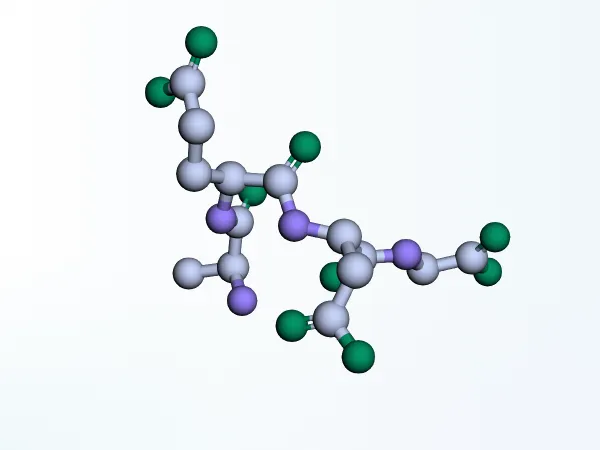
3D Structure

4-amino-acid peptide · 390.4 g/mol

Interactive model
Epithalon molecule previewExplore 3D Structure

Epithalon at the Cellular Level

Telomerase activator
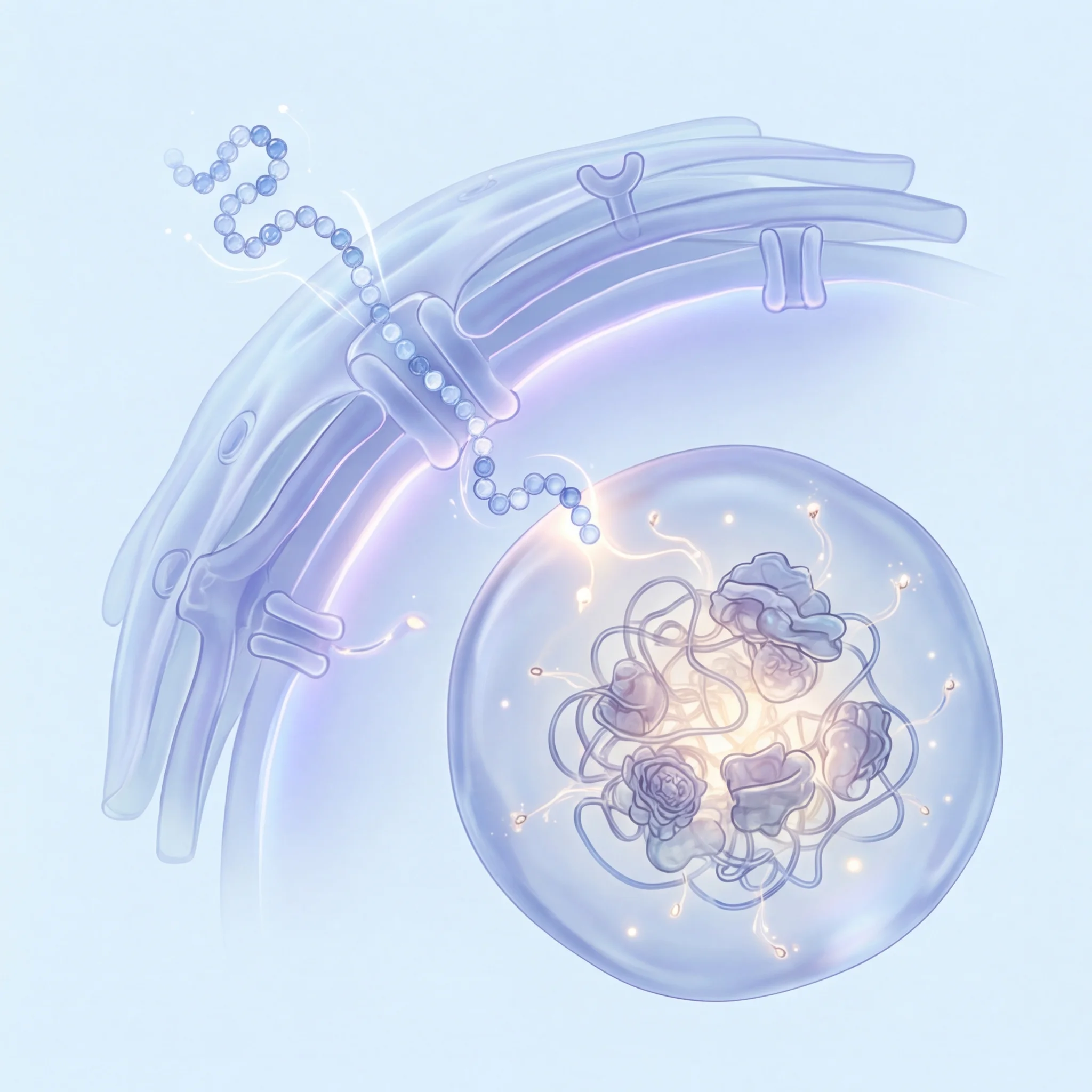
Mechanism
Epithalon cellular mechanism preview

Epithalon in the Body

Synthetic tetrapeptide (Ala-Glu-Asp-Gly)

Anti-Aging
Epithalon in the Body

Research Library

Peer-reviewed studies

From Published Literature

"Epitalon increases telomere length in human cell lines through dose-dependent hTERT mRNA expression and telomerase enzyme upregulation."

Al-Dulaimi et al.Biogerontology
Verify on PubMed